
Related Posts


Titian or Tiepolo?
Whenever the family spent looking at the artists of the Renaissance, Frank always had an opinion. To him, painting was all about light, and he found the work of Tiepolo superior to that of Titian.
Certainly, Titian and Tiepolo are both incredibly talented artists with unique styles and techniques. Titian, born in 1488, was a leading figure of the Venetian Renaissance and is known for his skillful use of color and light.
His works often feature dramatic and emotional scenes, with a particular focus on the human form.
Some of his most famous works include:
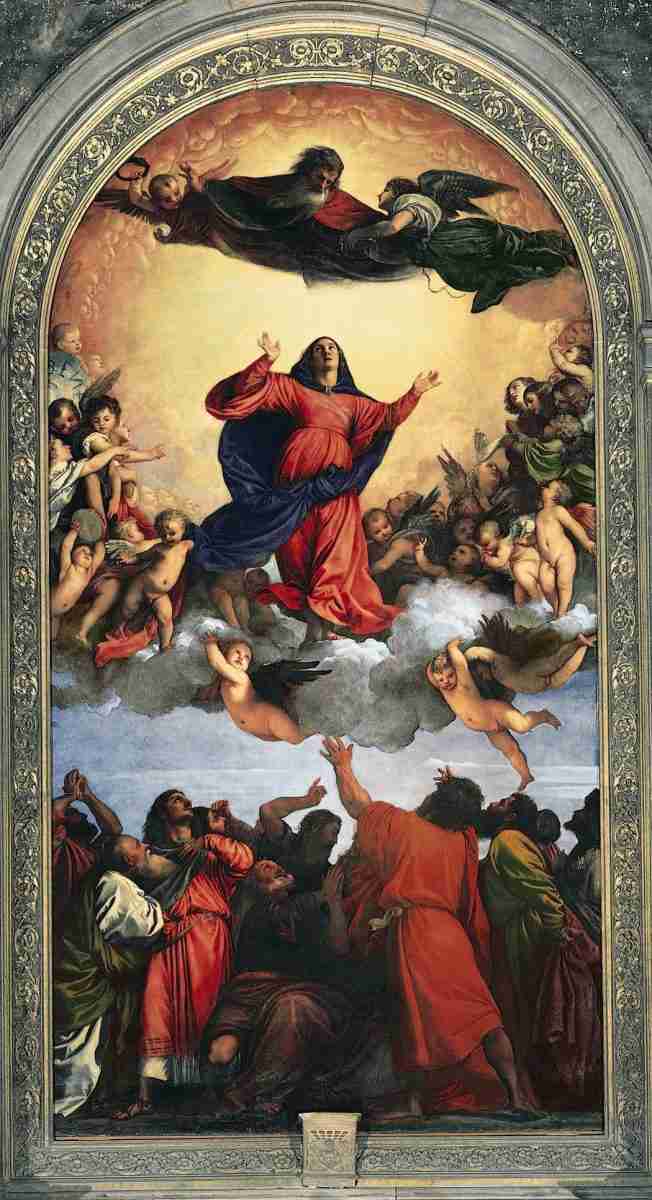
Assumption of the Virgin (at Santa Maria Gloriosa dei Frari, Venice): This painting is an altar piece and is 23 feet tall. At the bottom are the apostles, gesturing up to the Virgin, who is ascending to God the Father.
Notice how the apostle in red (Presumably St. Peter) lifts all eyes toward Mary, who is surrounded by Cherubim. God the Father waits for her with outstretched arms, and angels by his side.
and The Venus of Urbino. (At the Galleria degli Uffizi in Florence, Italy). This was painted in 1532 or 1534, and was perhaps completed in 1534, but not sold until 1538
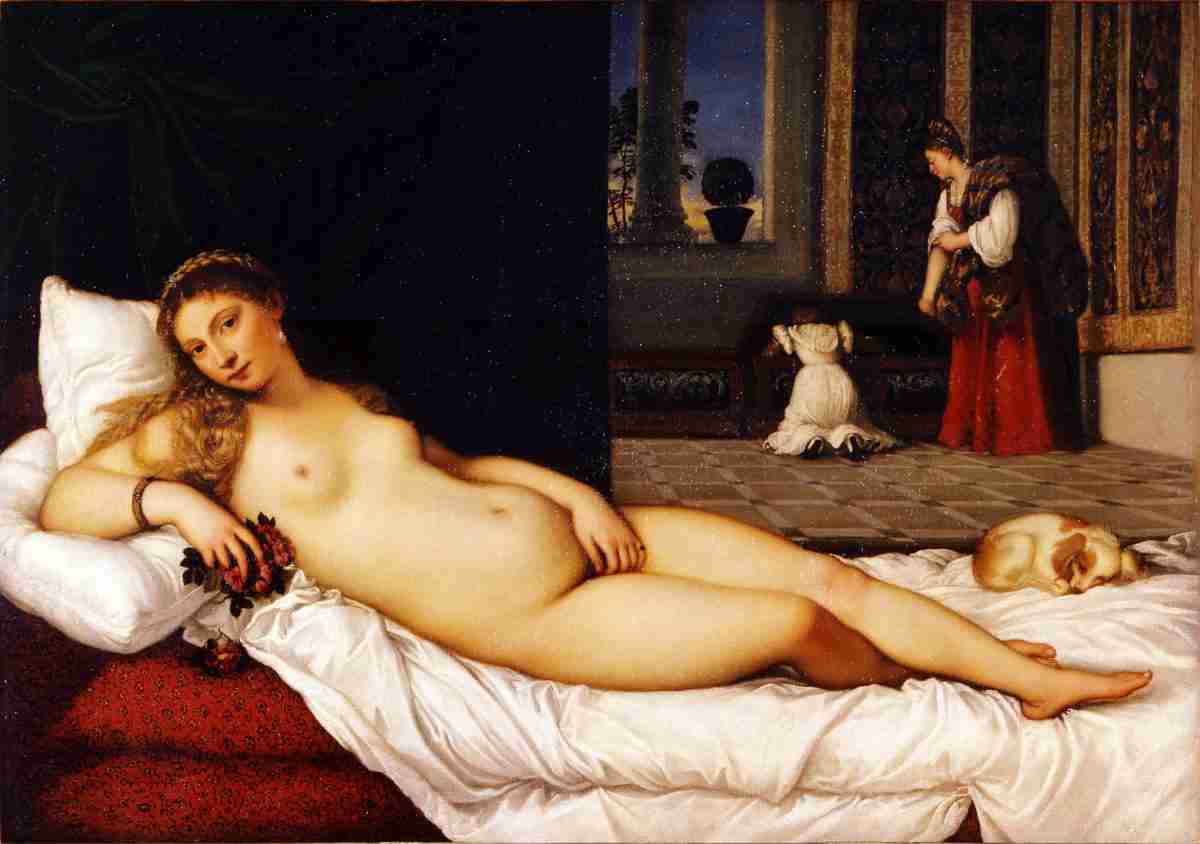
This painting depicts a nude young woman, traditionally identified with the goddess Venus, reclining on a couch or bed in the sumptuous surroundings of a Renaissance palace.
Giovanni Battista Tiepolo
Tiepolo, on the other hand, was born in 1696 and was a prominent Rococo painter. His works are characterized by their playful and whimsical nature, with a focus on movement and lightness.
Tiepolo often painted grand frescoes and murals, and his works can be found in churches and palaces throughout Europe.
Some of his most famous works include:
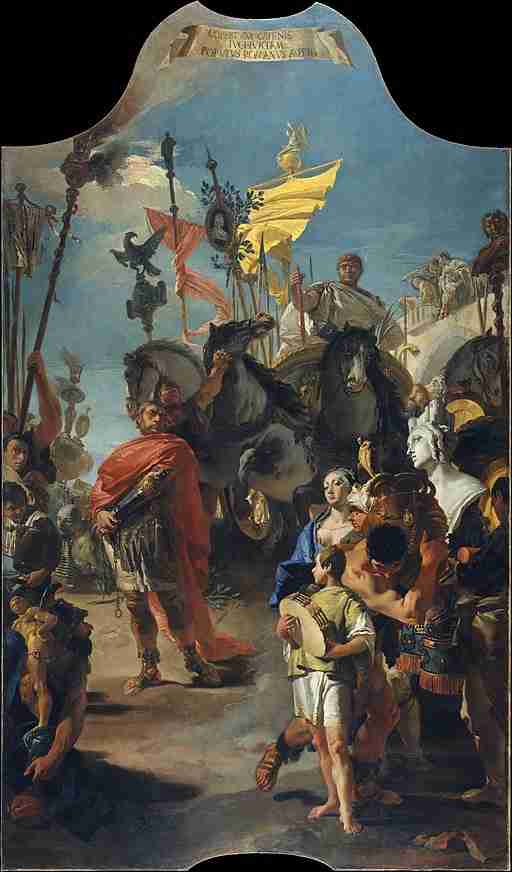
The Triumph of Marius, 1729
Tiepolo created 10 different canvases meant to decorate the main room of Ca’ Dolfin Palace in Venice.
The subject of this striking painting can be identified by the Latin inscription at the top of the painting, meaning “The people of Rome behold Jugurtha laden with chains.”
The African king Jugurtha is shown in red, before his captor, the Roman general Gaius Marius. This procession, was to glory Marius and witness the sumptuous treasures his army captured. They carried their bounty through the streets on January 1, 104 B.C.
Many say that Tiepolo’s incredible brilliance was to take events from history and transform them into realistic and engaging depictions of life. In this painting, Tiepolo included his self‑portrait along the left side of the canvas.
He often did this with his paintings. In fact, the self-portrait to the left is part of his ceiling fresco in the Würzburg Residence in Würzburg, Germany.
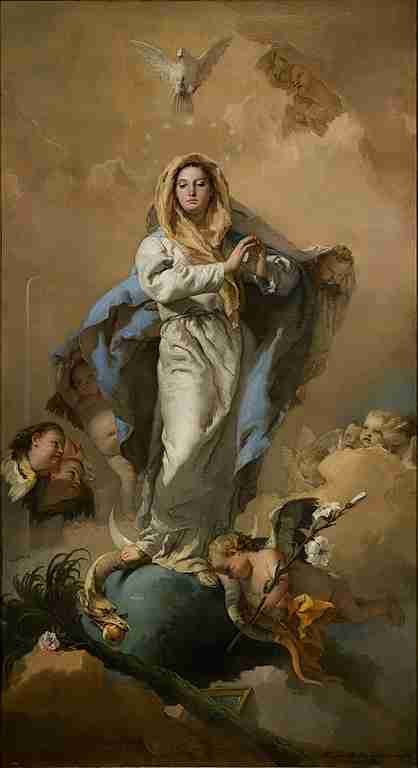
And The Immaculate Conception, 1767 - 1768
The painting was one of seven altarpieces commissioned in March 1767 from Tiepolo by King Charles III of Spain for the Church of Saint Pascual in Aranjuez, which was then under construction.
Notice the color. Muted but strong in its layering.This is a very subtle color palette, which draws the viewer in to see more and find the meaning behind it. The light source is from above with the iconic dove, representing the Holy Spirit, that gives her blessing from God to the Mother of Jesus. She is standing on a snake, the symbol of Satan, while cherubim surround her.
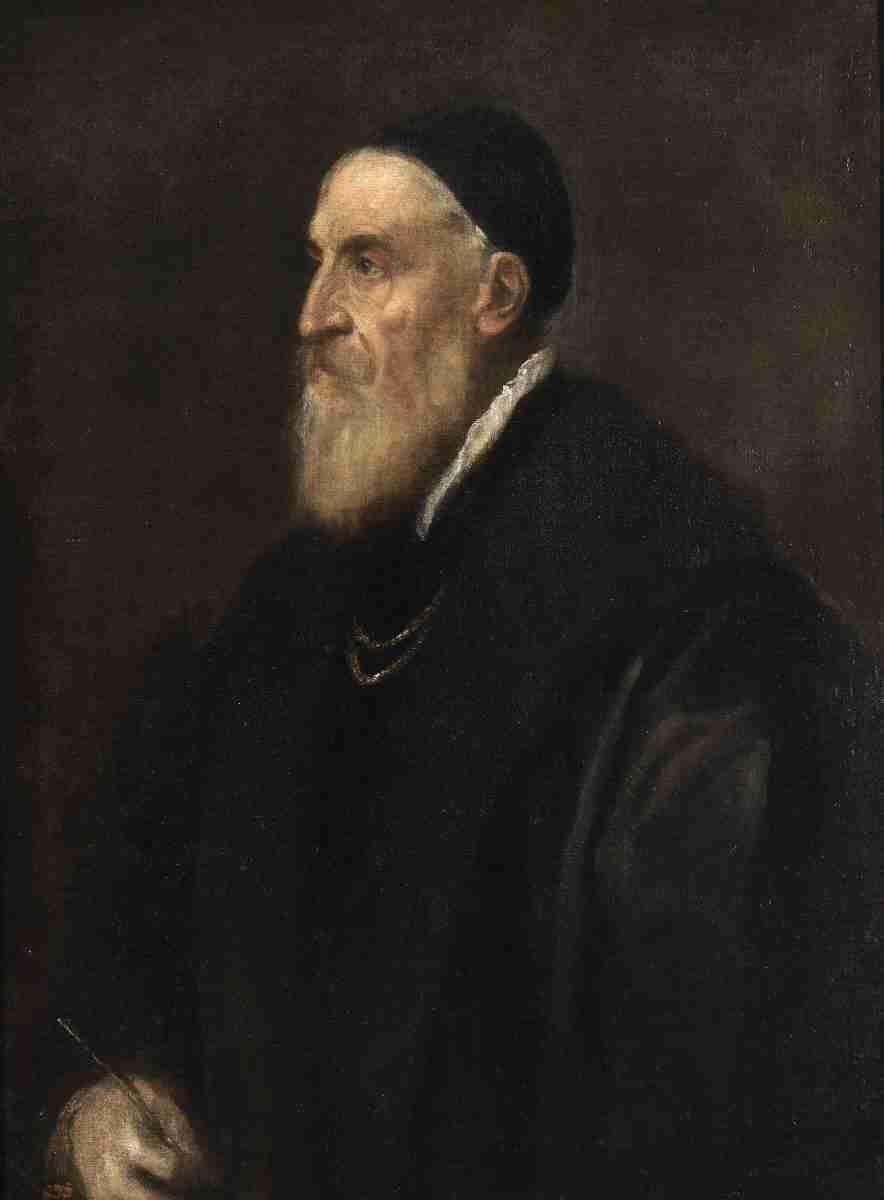
Self-portrait of the Italian painter Tiziano Vecellio (c. 1490-1576), better known as Titian.
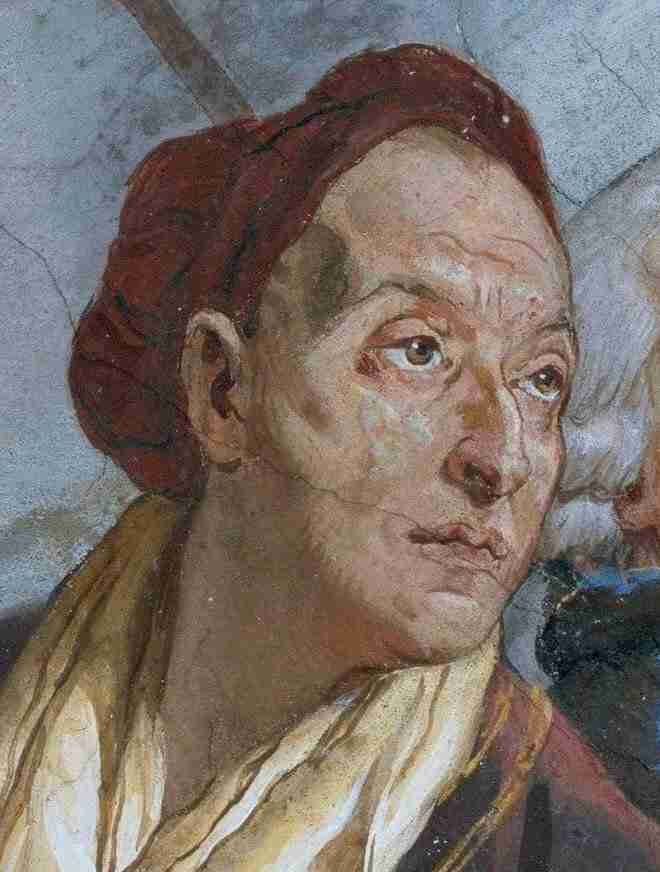
Giovanni Battista Tiepolo (Italian, 1696-1770)
Frank could paint from any period, and did. His preoccupation with light drew him to Tiepolo. Some would say these paintings were light in tone but dark in view. Many of Frank's paintings in this regard can be seen in the Britian's Scots Guard Officer or in Christ Interrogative. Notice his use of light. You can see that Tiepolo was a big influence.
However, Frank was in incredible portrait painter. In his paintings of family and friends, the influence shows again, as both Titian and Tiepolo painted many portraits.
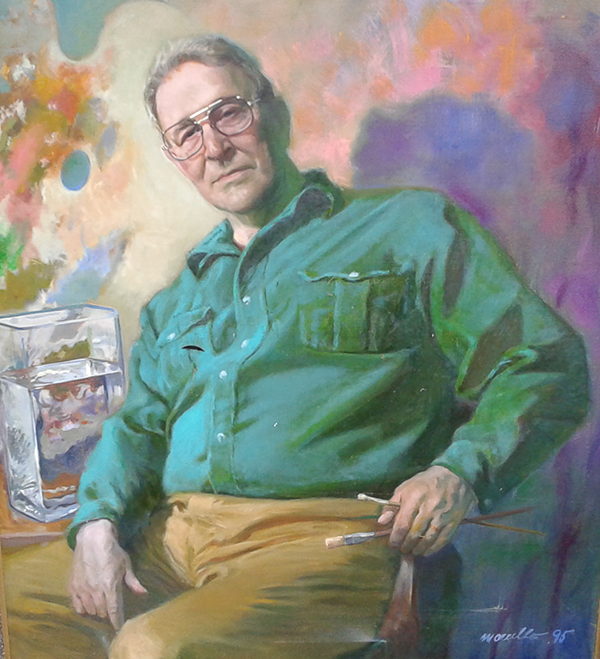
Frank G. Marcello and Water Color artist Frank Webb were good friends for many years. This is a Portrait of Frank Webb by Frank G. Marcello from 1995. (Original oil on canvas.)
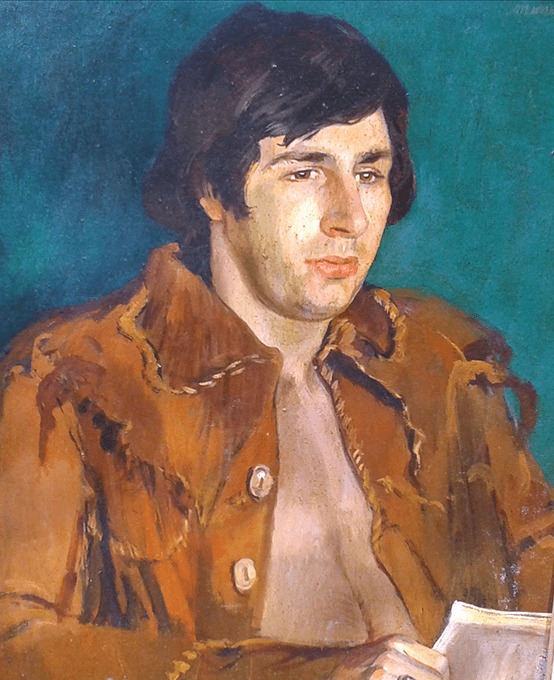
Portrait of Frank G. Marcello's son, Patrick, when he was 20 years old in 1971. Oil painting on canvas.
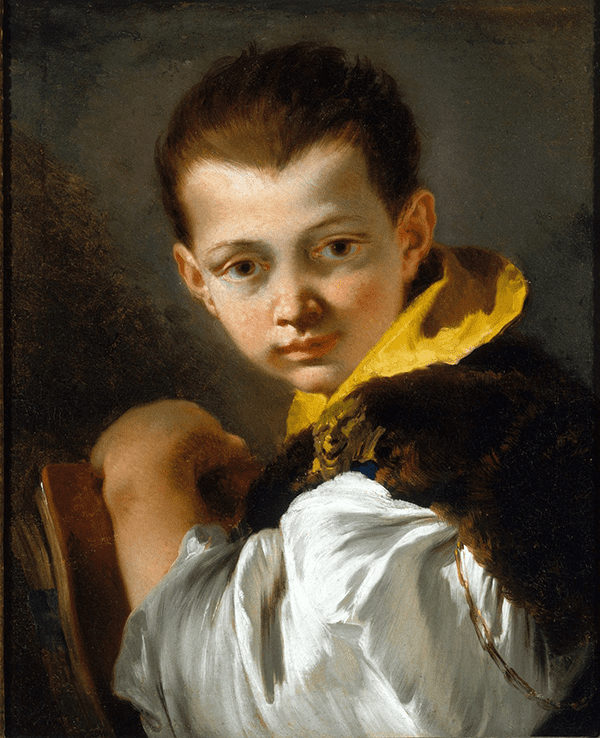
Boy Holding a Book, by Giovanni Battista Tiepolo, a portrait of Lorenzo Tiepolo, the artist's son.
How do these compare? Though Frank Marcello would never have compared himself to either of these great artists, they most definitely influenced him.