Two of The Greats: Titian or Tiepolo?

Two of The Greats: Titian or Tiepolo?

Titian or Tiepolo?

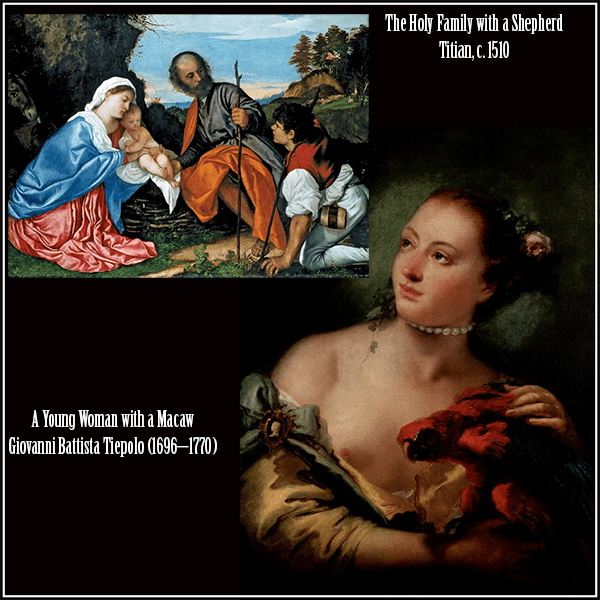
 Whenever the family spent looking at the artists of the Renaissance, Frank always had an opinion. To him, painting was all about light, and he found the work of Tiepolo superior to that of Titian.

Certainly, Titian and Tiepolo are both incredibly talented artists with unique styles and techniques. Titian, born in 1488, was a leading figure of the Venetian Renaissance and is known for his skillful use of color and light.

His works often feature dramatic and emotional scenes, with a particular focus on the human form.

Some of his most famous works include:

  Assumption of the Virgin (at Santa Maria Gloriosa dei Frari, Venice): This painting is an altar piece and is 23 feet tall. At the bottom are the apostles, gesturing up to the Virgin, who is ascending to God the Father.

Notice how the apostle in red (Presumably St. Peter) lifts all eyes toward Mary, who is surrounded by Cherubim. God the Father waits for her with outstretched arms, and angels by his side.
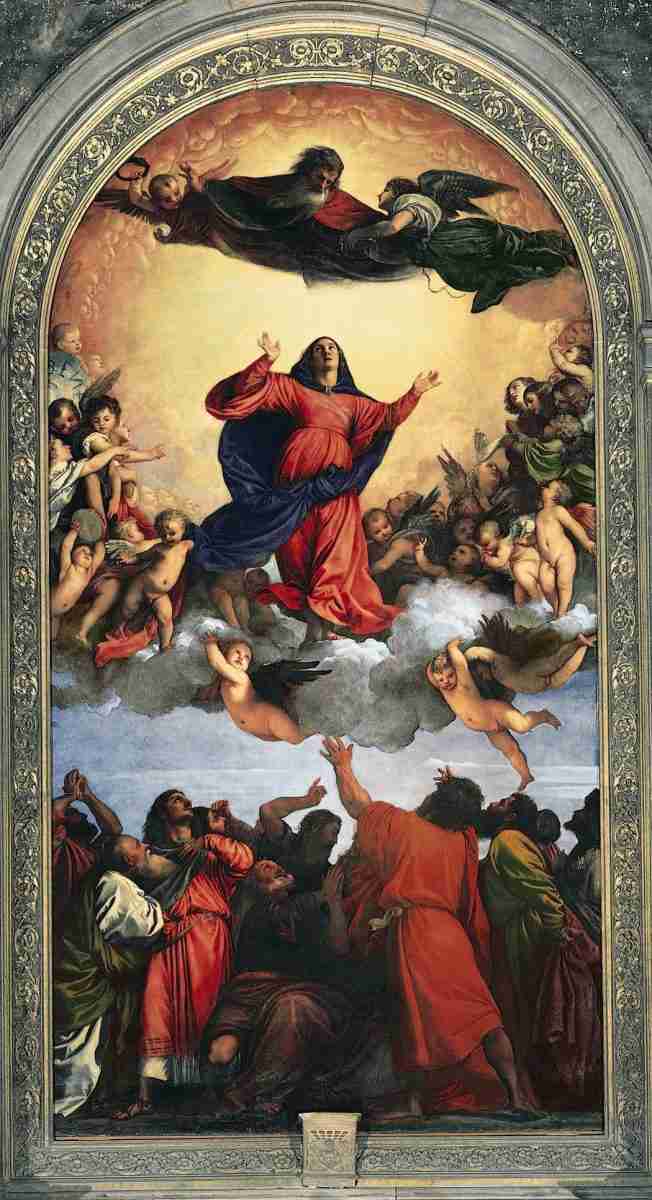
Titian: Assumption of he Virgin

and The Venus of Urbino. (At the Galleria degli Uffizi in Florence, Italy). This was painted in 1532 or 1534, and was perhaps completed in 1534, but not sold until 1538
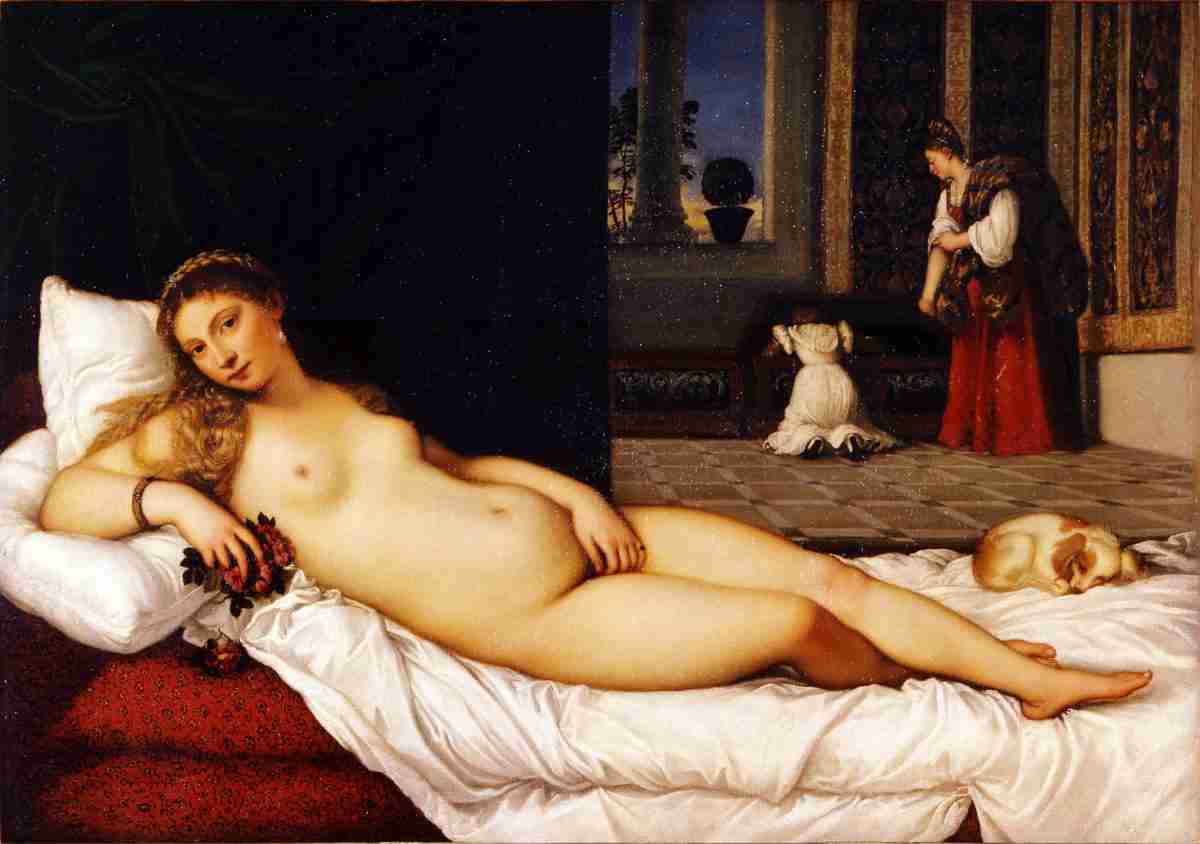
Titian: The Venus of Urbino

This painting depicts a nude young woman, traditionally identified with the goddess Venus, reclining on a couch or bed in the sumptuous surroundings of a Renaissance palace.

Giovanni Battista Tiepolo

Tiepolo, on the other hand, was born in 1696 and was a prominent Rococo painter. His works are characterized by their playful and whimsical nature, with a focus on movement and lightness.

Tiepolo often painted grand frescoes and murals, and his works can be found in churches and palaces throughout Europe.

Some of his most famous works include:
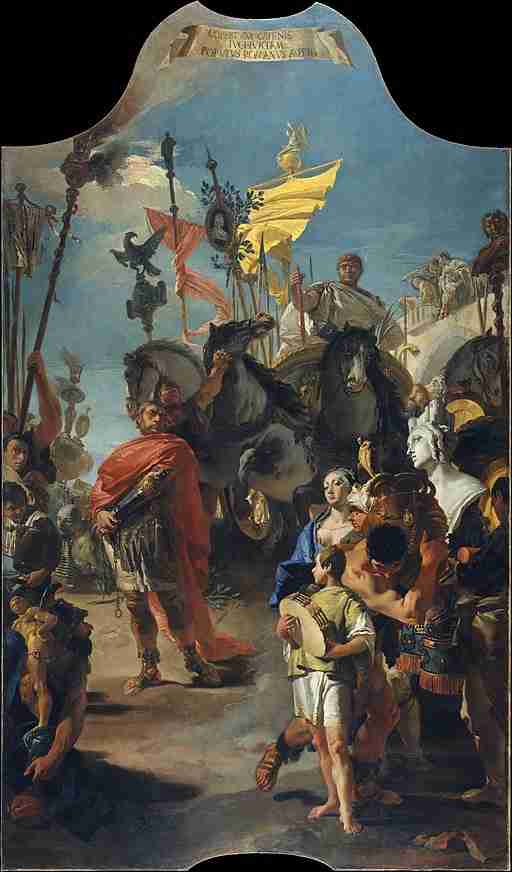
 

Giovanni Battista Tiepolo (Italian, 1696-1770)

 The Triumph of Marius, 1729

Tiepolo created 10 different canvases meant to decorate the main room of Ca’ Dolfin Palace in Venice.

The subject of this striking painting can be identified by the Latin inscription at the top of the painting, meaning “The people of Rome behold Jugurtha laden with chains.”

The African king Jugurtha is shown in red, before his captor, the Roman general Gaius Marius. This procession, was to glory Marius and witness the sumptuous treasures his army captured. They carried their bounty through the streets on January 1, 104 B.C.

Many say that Tiepolo’s incredible brilliance was to take events from history and transform them into realistic and engaging depictions of life.  In this painting, Tiepolo included his self‑portrait along the left side of the canvas.

He often did this with his paintings. In fact, the self-portrait to the left is part of his ceiling fresco in the Würzburg Residence in Würzburg, Germany.


And The Immaculate Conception, 1767 - 1768

The painting was one of seven altarpieces commissioned in March 1767 from Tiepolo by King Charles III of Spain for the Church of Saint Pascual in Aranjuez, which was then under construction.

Notice the color. Muted but strong in its layering.This is a very subtle color palette, which draws the viewer in to see more and find the meaning behind it. The light source is from above with the iconic dove, representing the Holy Spirit, that gives her blessing from God to  the Mother of Jesus. She is standing on a snake, the symbol of Satan, while cherubim surround her.
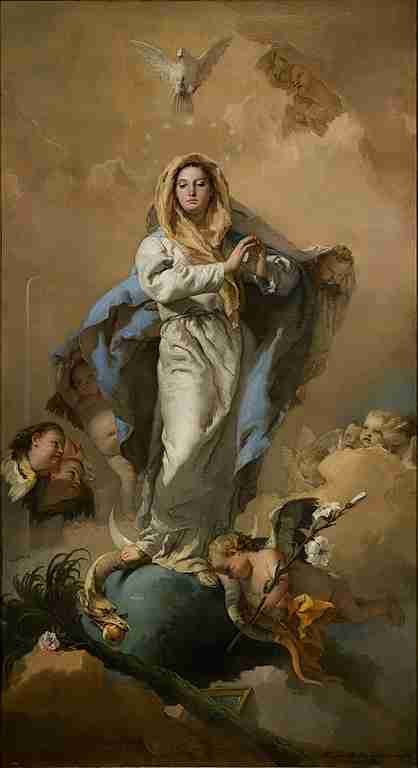

The Immaculate Conception, Giovanni Battista Tiepolo (Italian, 1696-1770)
Tiziano Vecellio (c. 1490-1576), better known as Titian

Self-portrait of the Italian painter Tiziano Vecellio (c. 1490-1576), better known as Titian.
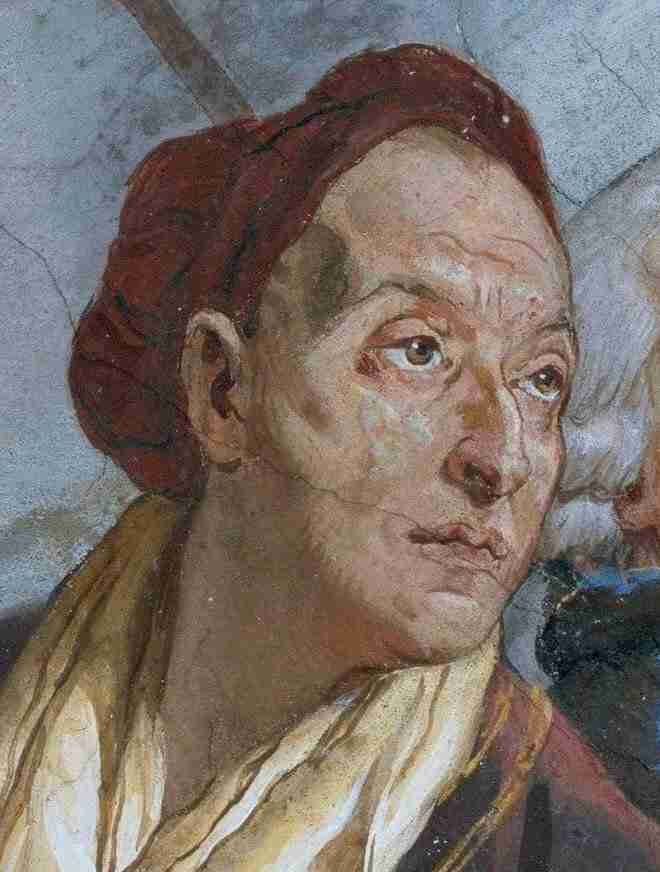
Giovanni Battista Tiepolo (Italian, 1696-1770)

Giovanni Battista Tiepolo (Italian, 1696-1770)

Frank could paint from any period, and did. His preoccupation with light drew him to Tiepolo. Some would say these paintings were light in tone but dark in view. Many of Frank's paintings in this regard can be seen in the Britian's Scots Guard Officer or in Christ Interrogative.  Notice his use of light. You can see that Tiepolo was a big influence.

However, Frank was in incredible portrait painter. In his paintings of family and friends, the influence shows again, as both Titian and Tiepolo painted many portraits.

 

Painting of Watercolorist, Frank Webb by Frank G. Marcello, 1995

Frank G. Marcello and Water Color artist Frank Webb were good friends for many years. This is a Portrait of Frank Webb by Frank G. Marcello from 1995. (Original oil on canvas.)

Portrait of Frank G. Marcello's son, Patrick, when he was 20 years old in 1971. Oil painting on canvas.
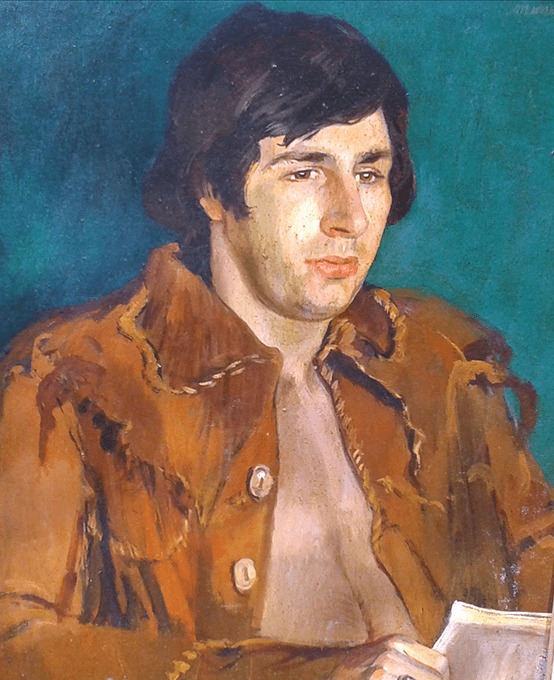
Patrick by Frank G. Marcello, 1971
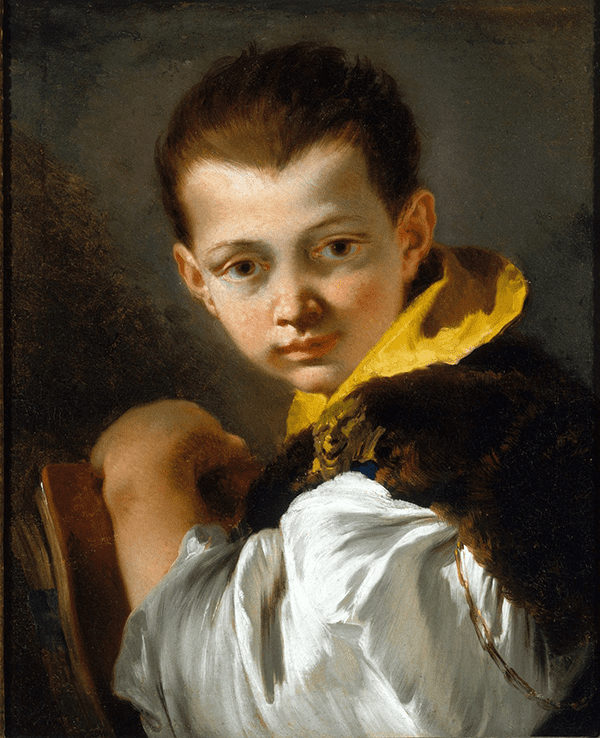
Portrait of the Artist's son, Lorenzo. by Giovanni Battista Tiepolo.

Boy Holding a Book, by Giovanni Battista Tiepolo, a portrait of Lorenzo Tiepolo, the artist's son.

How do these compare? Though Frank Marcello would never have compared himself to either of these great artists, they most definitely influenced him.
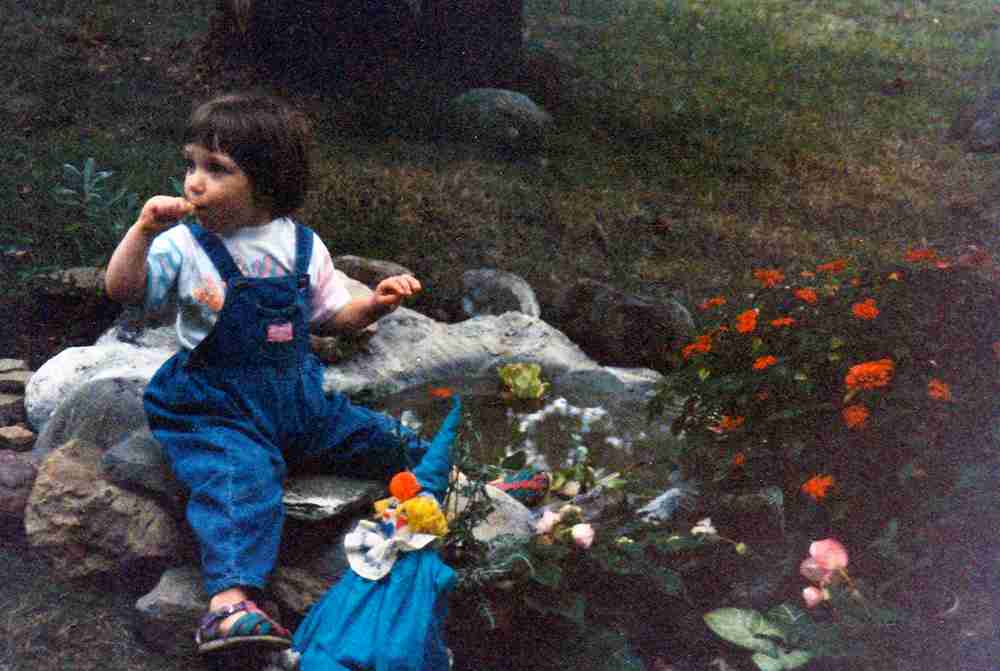
 

Clown Toys Inspired Irene

Clown Toys Inspired Irene

Our newest group of paintings are by Irene Veronica Marcello. and were painted in the early 1990s in Pittsburgh, Pennsylvania.

Why clown toys?

Frank and Irene loved poking around in resale shops, where they found many items that spawned paintings.

The clown toys in these paintings are more special than just mere resale gold -- they were her granddaughter Shannon's favorite toys for a while.

In fact, while Irene was painting them, Shannon would take them from her reference display to play with them, causing Irene to rebuild every time she wanted to paint. That's grandmotherly love.


The Touch of Persephone


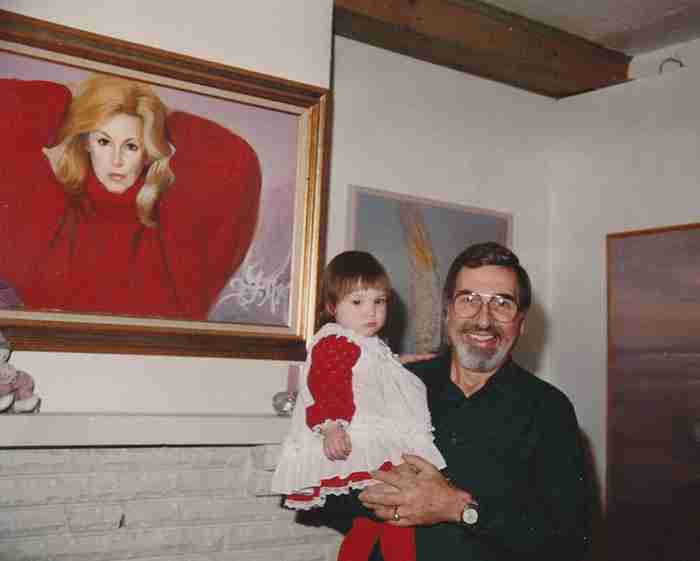
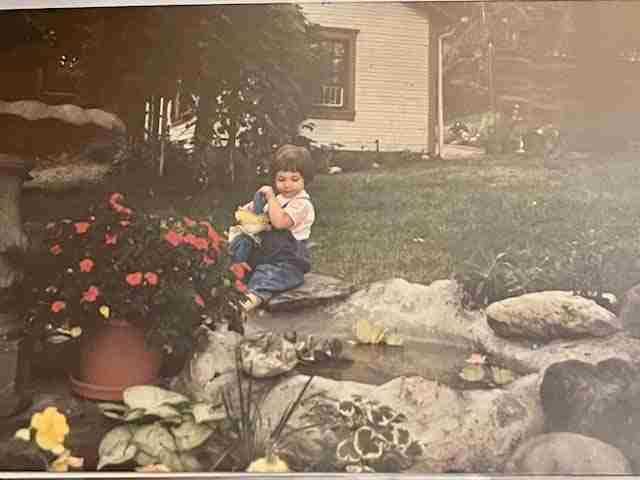
The photos with this post were taken around 2001, when Shannon was 2 years old.

In addition to her artistry, Irene was a wonderful gardener. She could make anything bloom just by touching it, it seemed. In the summertime, her home was surrounded by flowers and it was a beautiful, befitting place for Persephone personified, which is how I always thought of her. Beauty just exuded from her pores.

During this time, Irene became enamored of koi ponds. So, she had one dug and surrounded by the rocks you see. Shannon loved to take her "clownies," as she dubbed them, to the pond and watch the fish. This was always accompanied by a Tootsie Roll Pop candy, which she and Shannon shared while Irene worked.

Frank, of course, camera in hand was usually available to take photos. At the time, Shannon was their only grandchild, so grandparents... You know how that goes.

These clown toys offered us some great memories for us. The paintings we show here are only three of many. She also painted some of these clowns in Florida.

Clown Toys and Shannon
Shannon at Two
Macular degeneration: the bane of creative people everywhere

Macular degeneration: the bane of creative people everywhere

Macular Degeneration Removed Frank's Ability to Paint

an Unforgivable Diagnosis


Early on in the last decade, around 2001, Frank was given the worst possible diagnosis when it came to vision. Because of this, chances were 100% that he would lose it. To those of us around him, it was a devastating pronouncement. To think that Frank's ability to create great art would be taken from him was the lowest blow imaginable.

Yet, Frank never complained. He was never down about it. He just resolved to live day to day, hoping to keep his sight as long as he possibly could.

For a man who lived life to the fullest, this was highly unusual. He became almost stoic about it and at least for me, his daughter-in-law, I was truly impressed. I'm not sure I could have handled the diagnosis as well as he did.

Frank said he was ready to stop painting. Hmm...

We knew that might be true, but on the other hand, painting was something he did his entire life. I didn't buy it and figured he was protecting us and his grand-children. His good nature about it made things easier for us to accept, though he never said that was so. Who knows? Having known him for almost 50 years then, I was truly impressed.

Macular degeneration in the human eye and how it works

The human eye and how it works.

What Is Macular Degeneration?

Macular Degeneration (MD) isn't unique to artists, of course. In fact, it is the leading cause of vision loss in all adults over 60. MD now affects more than 10 million Americans! Plus, the older you get, the more likely it is that you will develop this disease of the eye. If you're over 75, your chances of having macular degeneration affect your vision is one person in three. Pretty scary.

The worst thing about macular degeneration is that there is no cure. Eventually, those diagnosed with the disease will go blind in one eye or both.

The macula is the central portion of the retina, and the retina is a thin tissue that lines the back side of the eye. The macula transforms light from the images we see before us into nerve impulses that are then carried to the brain via the optic nerve.

The macula records detailed information from the center of our visual field. This function allows us to read, recognize facts, see color and fine details. It also allows us to drive a car.

When the macula degenerates, the center of vision becomes cloudy. Frank often described it as "seeing only the edges" of things, while the actual thing he was looking at was greyed out -- like there was a cloud in front of it. As time went by, he saw less and less, and finally became blind. This is how he lived for about the last 10 years of his life.

There are two types of macular degeneration -- wet and dry. But the dry type is helped with a change in diet. The wet type, where blood vessels leak into the eye, has some treatments. Frank had some where the doctor shot something directly into his eye. I never understood how he could stand that. Just the thought freaks me out.

To make matters worse, right after one such treatment, Frank was involved in an auto accident and it made his eye worse. In fact, he ended up losing the eye completely. And the treatments solved nothing. Frank still went blind.

What macular degeneration looks like

How macular degeneration appears to the sufferer.

the last painting


Frank passed away at the age of 91. It wasn't the macular D that killed him, as it's not a deadly disease. He died from complications of Parkinson's Disease, which he contracted very late in life -- another condition for which there is no cure. Yet, he left behind a lifetime of artistic expression, which continues to reflect his varied experience and his long life.

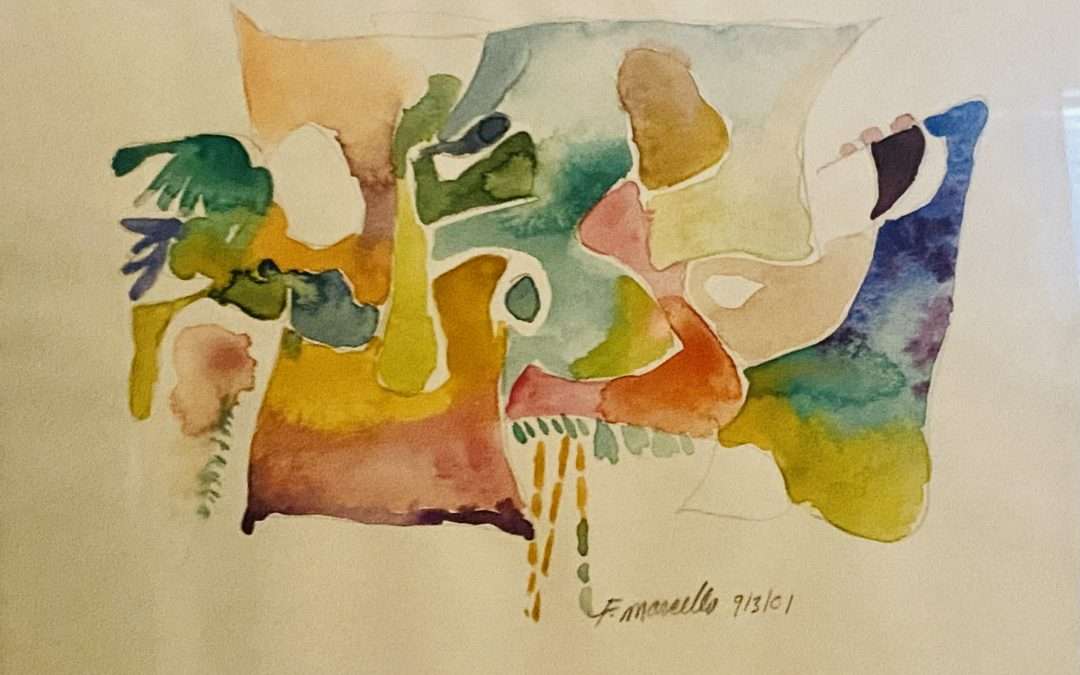
The featured image here is one of Frank's last paintings -- an abstract watercolor. He was fooling around out by the pool one day, and came up with this, his last painting. He looked at it chuckled, and said, "You want it?" I eagerly accepted. It's not the art that Frank was used to producing by any means, and we had already been given many of his paintings.

Yet, I knew this one was special. I thought it might be one of his last, if not THE last painting he ever did. I'll never part with it. It's really meant for his granddaughter -- my daughter -- and one day, she'll be more than happy that I could save it for her. The day Frank gave it to me, I  immediately framed it and hung it on my bedroom wall. Nothing more than a game to Frank, became a lovely remembrance for us.

The Artistry & Music of Frank Marcello

The Artistry & Music of Frank Marcello

Frank Marcello, Artist and Musician

Frank's Art of Music

In addition to his art and his commercial illustration efforts, Frank had another vocation that almost drew him away from the art business. It turned out that growing up, Frank developed an interest in music. Frank possessed a special talent for singing in the crooner style of Crosby, Como, and Sinatra.

Frank got started singing in the late 1950s, when to supplement his inconsistent freelance artwork income, he would moonlight playing the bass fiddle and singing with local jazz bands at various social events like weddings, parties, and other venues that required live entertainment.

Frank had connections and contacts in the music business through his family, who also possessed the art of music. His uncle in Philly, Jimmy Pupa was a jazz trumpet player and his other uncle, Nick DeLuca, in Atlantic City was a jazz saxophone player. Both uncles were very talented and had been recruited as performers by the big bands that passed through Pittsburgh in the 30s, such as Charlie Barnett, Artie Shaw, Glenn Miller Tommy Dorsey, and Benny Goodman.

Frank sang so well that he was invited to perform at Pittsburgh’s famous Variety Club and was filmed on television appearing on KDKA, Channel 2, the first commercial, national TV broadcasting station. Based on that performance, Frank was offered a record contract by a company in Philadelphia, who recognized his art of music talents. After much agonizing, Frank turned their offer down as being too risky at a time when money was scarce. He couldn’t afford to let go of the art business. The company ended up signing another young singer to replace Frank, who went on to great success. The other singer’s name was Elvis Presley.

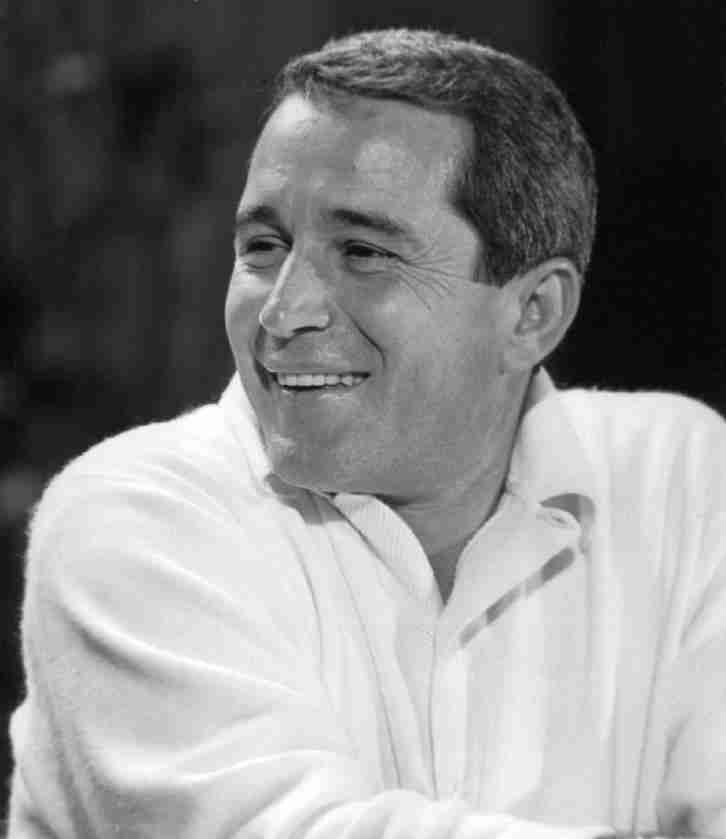
Perry_Como_1962

Perry Como, 1962

art of music: brass instruments
Bass Fiddle Ink Drawing

Working Downtown

Meanwhile, in downtown Pittsburgh, Marcello Studios was struggling, and the going was rough. One day, Frank ran into his old friend, Jack, who had just been promoted at McCann Ericsson and put in charge of the Westinghouse advertising account A chance meeting as they say in “Middle Earth”!

For the next ten years, Frank serviced virtually all the major Corporations in Pittsburgh, with McCann always at the front of the line. The mind-numbing tedium of commercial art world almost burned Frank out, but he never abandoned fine art and continued to produce oil paintings at home. He made no attempts to sell them, so those paintings, along with the paintings of his wife, Irene, piled up and accumulated. There are hundreds of paintings in all.

Downtown Pittsburgh, Pa. 1968

Downtown Pittsburgh, Pa. -- 1968

New Interests and Investments


Both Frank & Irene were members of the Associated Artists of Pittsburgh, and they entered a few shows now and again, but they really weren’t heavily involved because they weren’t interested in the politics involved. They won awards here and there, but their work just accumulated.

Eventually Frank’s friend Jack moved on from McCann and McCann moved on from Pittsburgh as did most of the big accounts.

Westinghouse, a company that Marcello Studios did a great deal of business for, went out of business as did many of the great industrial concerns in Pittsburgh. In the mid-70s Frank closed Marcello Studios and moved back to the farm, where he continued to service what remained of his old clients such as the Holy Childhood of Pittsburgh and the Christian Publisher Whitaker House, doing book covers for them. But the business was never the same.

With the demise of the art business, Frank invested wisely in real estate and converted big Victorian Houses in the old city into duplex rentals. Sweat equity sustained the family and both Frank and Irene kept painting.

Logo of the Association of the Holy Childhood
Talented Pittsburgh Artist

Talented Pittsburgh Artist

Illustrator and Fine Pittsburgh Artist

Early Life

Frank Marcello was born on May 11th, 1929, in Pittsburgh Pa.  into a family of poor Italian Immigrants. Frank was the eldest survivor of five children and named after his older brother and his mother’s first-born son, who died in infancy of spinal meningitis. Because of this, Frank always described himself as his mother’s replacement for her lost first-born son.

From very early on, Frank demonstrated a strong gift for drawing. Being the son of Italian immigrants, who were pretty much looked down upon, in the very much ethnically biased Pittsburgh melting pot community. Frank did not receive much attention from his teachers at school and so he did not do well at first. He always got himself into trouble for doodling and drawing on any available flat surface whether it be schoolwork, desktops, back boards, or even the very walls of the school.


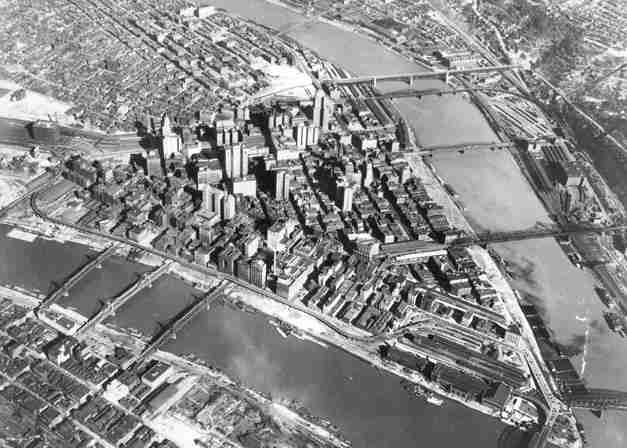
The Point, Pittsburgh, 1930s

Downtown Pittsburgh -- The Point, 1930s

High School Years


Eventually, Frank grew to attend Pittsburgh’s Central Catholic High School. But he suffered there too. In those days, the predominantly Irish Jesuit Priests and the entire student body weren’t exactly cordial to the sons on immigrants from southern or eastern Europe. This statement is not intended as a criticism or condemnation of the Catholic Church or Irish Catholics. It is merely a statement of fact, regarding the state of ethnic relations during 1930s and 40s in the USA. Despite the romantic praises of the historical pundits the great American “melting Pot” was no bed of roses and most people today would agree that not much has changed regarding newcomers, even up to the present day in which we all see the same biases at work.

Always getting into trouble or being involved in fights eventually forced Frank to change schools and so, he ended his stay at Central and finished at Pittsburgh’s Peabody High School (now Barack Obama Academy of International Studies 6-12) in the famous East Liberty section, known for residences of the wealthy corporate elites like the Melons, the Fricks, and many of Frank’s contemporaries  at Peabody, graduated and went on to fame and fortune, such as Andy Warhol, actor Frank Gorshin of the TV series Batman of the 1960’s, and actor Charles Grodin.

At Peabody, Frank’s whole life turned around because one teacher took notice of his talent and began to encourage him -- his art teacher. Sometimes a little praise and encouragement can go a very long way. The result was that by graduation, Frank had won a scholarship to practice his talent in Rome, Italy.

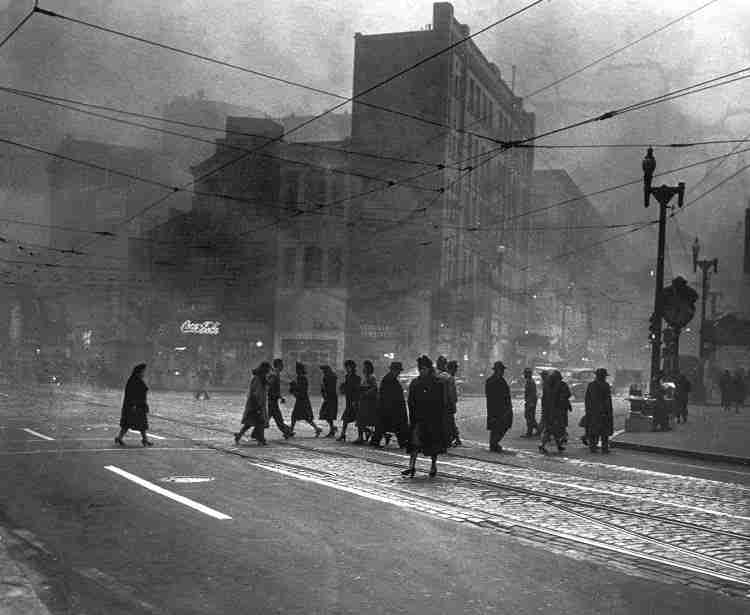
Pittsburgh, the "Smoky City", 1940s

Pittsburgh, Pa. -- The "Smoky City", 1940s

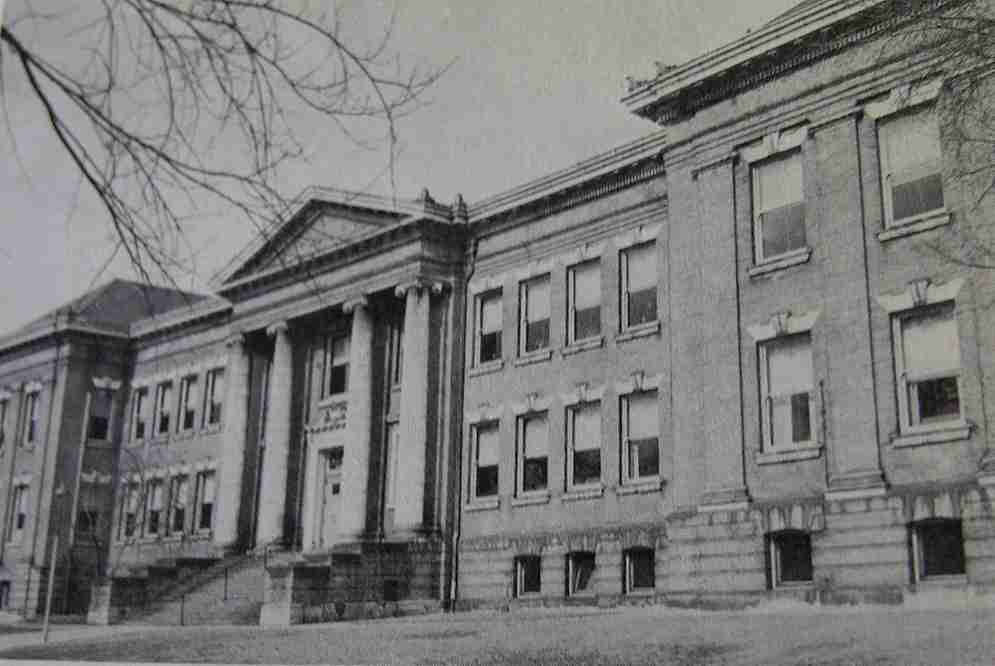
The Old Peabody High School

Old Peabody High School

Higher Education


It was a wonderful and unimaginable possibility for a poor Italian American boy to return to his roots as a gifted youth. Sadly, it was not to be.

There was just no way that a poor immigrant family could afford to support their son in such a faraway and expensive place. After all, it was all the family could do just to get to America, never mind, the possibility of returning.

The good news was that Frank, thanks to that wonderful Art Teacher at Peabody, also received a scholarship offer from the famous Pennsylvania Academy of the Fine Arts (PAFA), Barnes School, in Philadelphia. Here we see serendipity at work because it just so happened that Frank had an aunt and uncle who lived in Philadelphia, and his family was able to arrange for Frank to live with his relatives, while he attended school.

 Shortly after matriculating at PAFA, Frank met up with Irene Wackosski, another gifted student, who soon became the love of his life and eventually, the mother of his three children. Perhaps from an artistic point of view, she became his muse and his eternal source of inspiration.


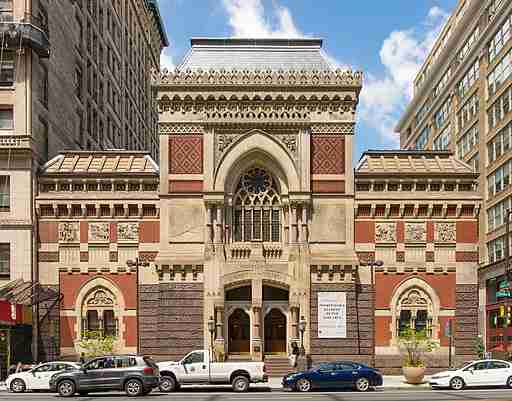
Pennsylvania Academy of the Fine Arts building

Pennsylvania Academy of the Fine Arts building

Work Life


By 1951 Irene was pregnant with their first child and only son, two daughters would follow. So both Frank and Irene were forced to drop out of school in their 3rd year at PAFA, Barnes, and Frank was forced to seek a job to support his new family. He and Irene married and moved back to Pittsburgh. Frank got his first job as an artist with the old Display Studios, a company that specialized in the creation and production of corporate marketing devices like convention displays.

Young Frank did not get to be the star artist in the beginning, and being inexperienced, got to do the actual grunt work producing the displays; however, his excellent craftsmanship and innovative ideas soon made his bosses take notice of his talent. It was not long before other studios began to seek him out. So began his freelance period. He worked long days to put food on the table and long nights, where he practiced and perfected his craft as a commercial illustrator.

Frank was well-placed to develop a career in commercial art because during the 1950s and -60s, Pittsburgh was an industrial powerhouse. During that time, it was the third largest Corporate Headquarters city in the USA, after New York and Chicago. Most of the Country’s major advertising agencies maintained branch offices in the city, which made for a “target rich” environment for ambitious young freelancers.

Frank was able to support himself and his young family by servicing the many small art studios that did the work for the big agency s and eventually Frank was accepting work directly from many of the corporate heavies, such as US Steel, Westinghouse, Dravo, Alcoa, Cutco, and more.

In 1957 Frank bought a big old rundown farmhouse in the eastern suburbs, complete with a barn, a chicken coop, and a magnificent fruit orchard. He would live there for the next 50 years. It was there that he raised his family and produced hundreds of illustrations and over 150 major oil paintings, which were completely unrelated to his commercial endeavors.

In 1964, Frank decided to “go downtown,” and rented a penthouse space at the top of the old Keenan Building (one of the first skyscrapers with 18 stories). Marcello Studios was born and with it his flying horse Pegasus Logo. His “Mad Man” period had begun.

Cutco Cookbook, Illustrations by Frank Marcello, 1961

Cutco Cookbook Illustration by Frank Marcello

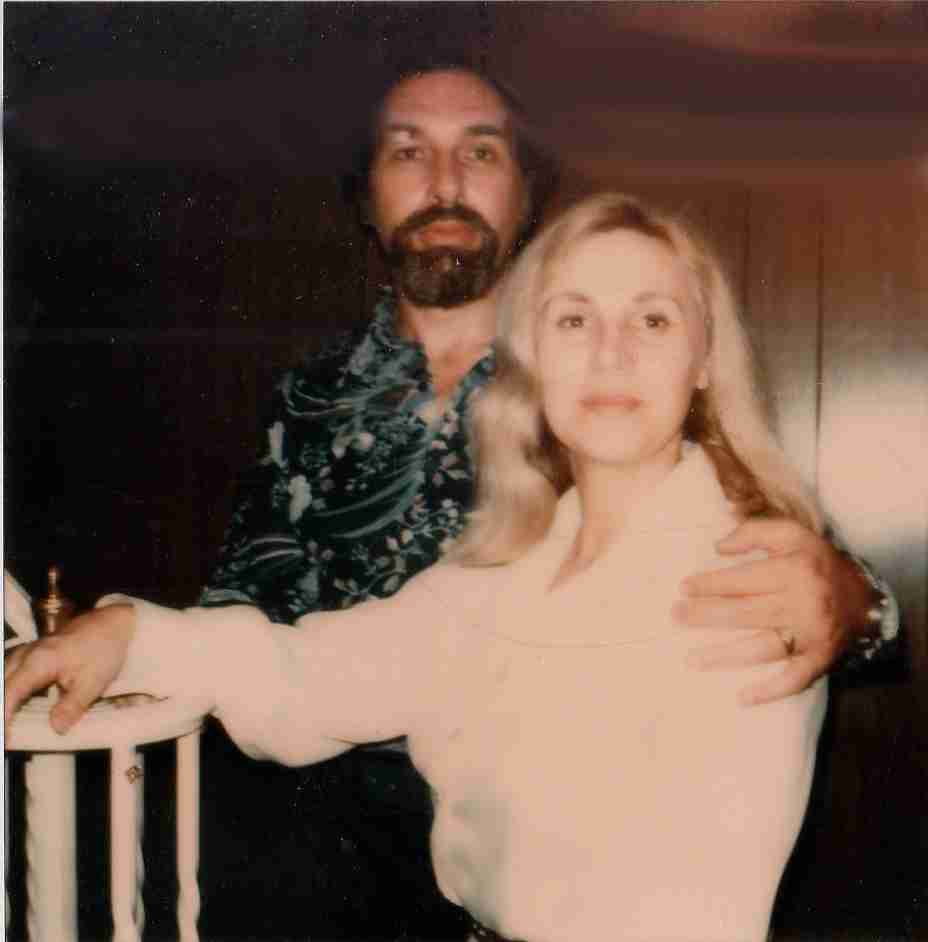
Frank G. & Irene Marcello, 1960s

Frank & Irene Marcello, c. 1969-70

The Marcello Estate
Marcello Estate (Front)

Present Day Marcello Estate (currently under repair) lacks the colorful flowers and grape arbors of days gone by.  Aside the home is Irene's studio. To the back of the property are a three car garage and historic barn. The Marcellos moved permanently to their 2nd home in Sarasota Florida in November 2018.

Fine Arts… What Does That Term Mean?

Fine Arts… What Does That Term Mean?

Art, Fine Arts, Visual Art, Decorative Art... What's the difference?

When you hear the term "fine arts," what does it mean to you?

It's not about installations, which are art, but visual art. And though some consider craftwork to be art, again it's utilitarian. Fine art is created purely for its beauty and aesthetic.

Fine arts is different from applied arts, which would include the artwork that you see on T-shirts or even tattoos. Some of those are amazing and beautiful, but the works are not created for their aesthetic value alone.

Fine arts is also different from decorative arts. Though you might say that some paintings can be decorative in nature, the paintings weren't created to decorate objects, like Toll Work or wall hangings that are meant solely for decoration.

Fine arts might be said to include these forms: drawing, painting, sculpture, photography, and printmaking. Visual arts also include forms like painting and sculpture, but you can also include crafts, photography, film, graphic design, architecture, fashion design, and more.

Artists make art, no matter what form they use. Fine art isn't lofty, it's beauty for beauty's sake. There is no other purpose. Most of the Marcellos' paintings can be classified as fine art.

But Irene also loved to paint screens and boxes, which would be decorative art. Seeing one of these boxes, though, would still make you see the beauty in the item that was decorated.

For a while, Frank tinkered in putting junk sculpture together. His warriors built from old car parts and junk was a delight, and his "nailed" fish is a family heirloom. They kept it above their pool  deck in Sarasota.

Artists create, period. Whether their work is considered fine art, applied art, decorative art, or performing art, it's all meant to make us feel something and/or to make us think.

The whole Marcello family has some form of art to be engaged in -- decorative art, graphic design, anime art, crafts, and fine art. Even writing and music.


Irene Marcello's Flamingo Box, c. 1983

Irene's "Flamingo Box," c. 1983 (Decorative)

Watercolor Abstract by Frank Marcello, 2001

Watercolor Abstract by Frank G. Marcello, 2001 (Fine)

Bronze Bust (Patrick at 3), Irene Marcello, c. 1953

Bronze sculpted bust of Patrick at 3 by Irene Veronica Marcello, c. 1954 (Fine)