The Story Behind the Jesus Paintings

The Story Behind the Jesus Paintings

Art historians are often excited to explain how paintings came to be. I absolutely love that. I took several courses in college and watch different art analysts all the time.

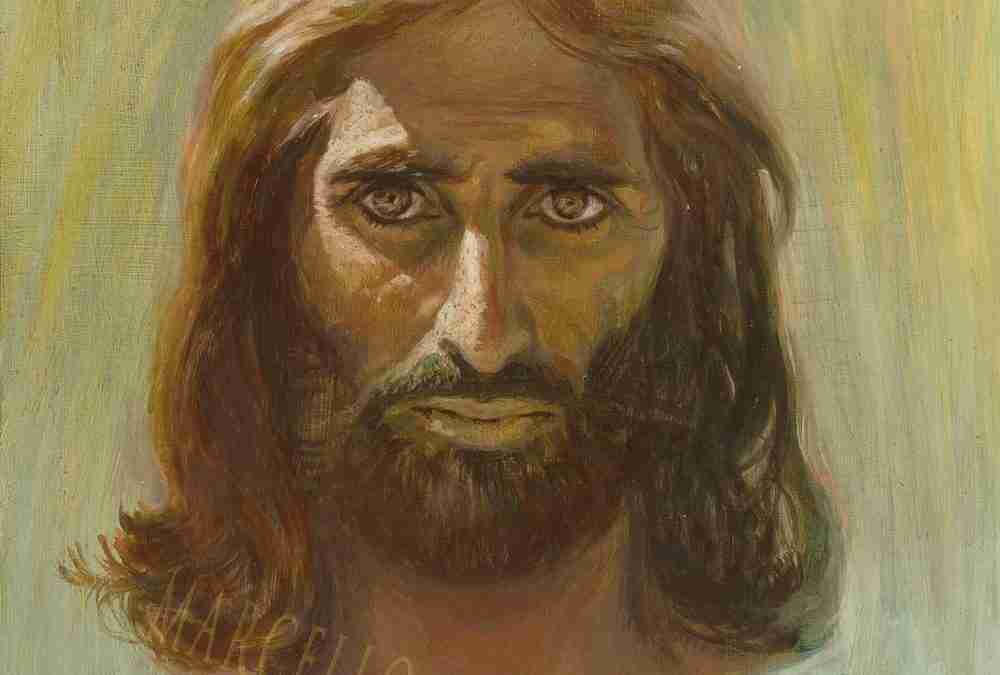
So, it's time to give you some Frank G. Marcello analysis. I lived it. I want to give you some background on the Jesus paintings. Many people ask why so many? Both Frank and Irene were into series painting. Frank painted Jesus. Irene painted swimmers underwater.  All magnificent. But Frank's most intense paintings, at least to me, were the Jesus paintings.

In the early 1970s, Frank was the cover artists for Whitaker Publishing, a thriving Christian publisher. He was quite taken with the Born Again movement then. In fact, though non-religious in later life, he was soaking up the folks' enthusiasm, and it affected him quite a lot.

In fact, one of his very old friends' daughter was saved by that movement. She had been a hard-core drug user, and watched her younger brother die from a drug overdose. That changed everything for her, and she was very much into the whole Christian philosophy. It had become her redemption and her savior.

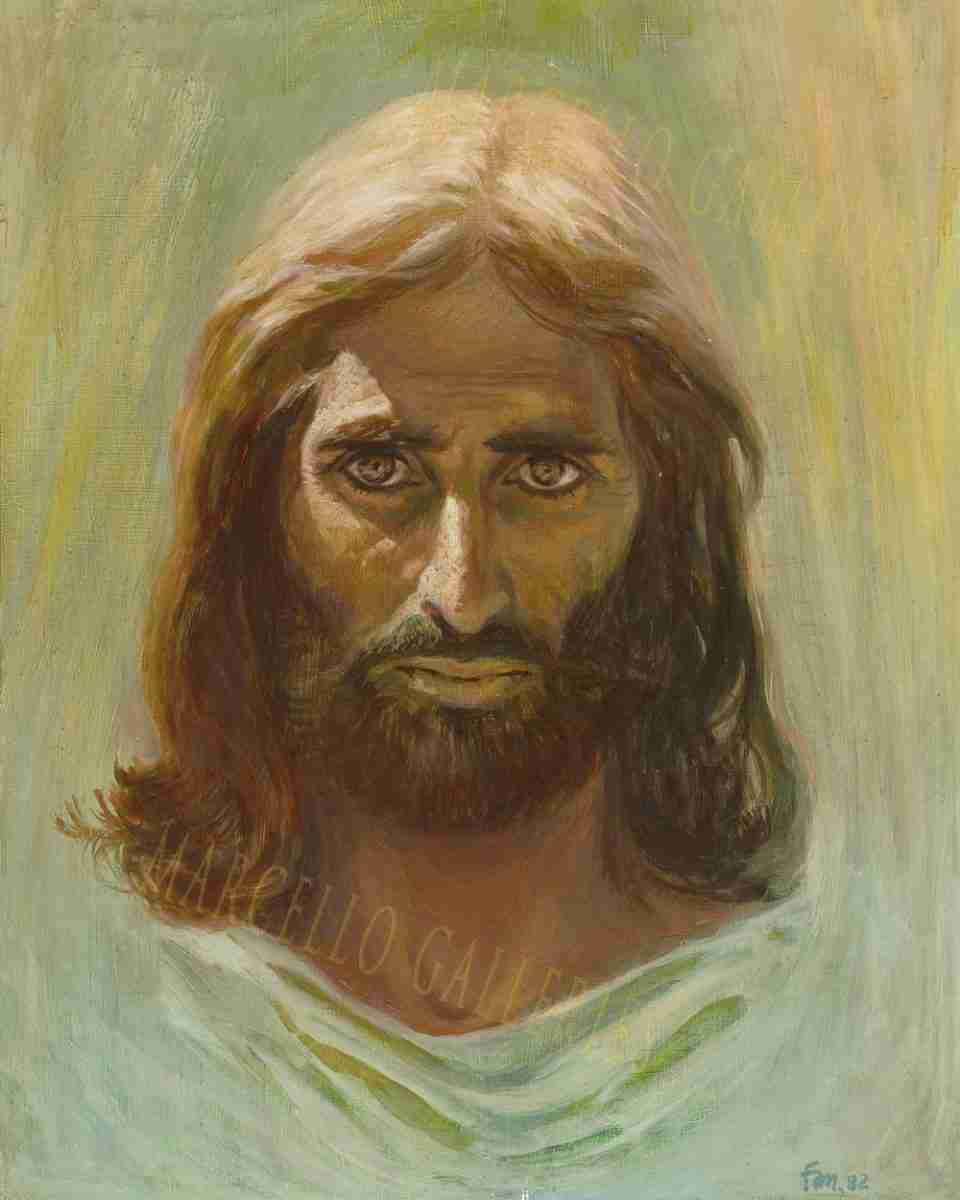
So, owing to this fascination, in his spare time, Frank wanted to do portraits of Jesus. He enlisted friends of the family and even men who worked for him on his properties and on the estate to pose for those portraits.  Christ Our Lord, Christ Interrogative, and Christ Intensity are all of one friend of the family. Bobby did look like Jesus in those days. What surprised me is that he sat for so many of the Christ paintings, but he loved talking to Frank, who was always ready for any kind of intellectual discussion.

But there are more portraits that we haven't even shown. Those are of his employees, his crew, whatever. Frank often came home grubby from working with the guys, too. He loved tinkering and when he wasn't applying his talent, he tinkered a LOT.

In that period, both Frank and Irene were into junk sculpture. Frank made crosses for all of us out of some kind of metal. I say "some kind" because they were dark and painted gold, but only in places. He probably picked the metal up on one of his many, many visits to thrift stores. He found treasure in them every time he went. The crosses were charming. I know I have it still, but I haven't a clue where. Maybe I'll find it one day and show it to you. Frank was a special man.


Fine Art Therapy: A Pathway to Emotional Healing

Fine Art Therapy: A Pathway to Emotional Healing

Fine art therapy has a profound influence on mental health, serving as a powerful medium for expression and healing.

Engaging with art—whether through creation or appreciation—can provide individuals with an outlet for emotions that may be difficult to articulate verbally.

When you look at the collation of blues in a Monet or feel the simplicity of frustration in Edvard Munch's The Scream, there is an emotional component for most of us. We instantly get a window into the artist, but fine art can also give us a window into ourselves.

This process can foster a sense of identity and belonging, helping individuals navigate their feelings and experiences.

Art therapy, a recognized therapeutic practice, utilizes fine art as a tool for emotional and psychological healing.


Fine Art Examples
 

Here is a painting that may give you the emotional correlation we mean:

Succulent by Irene Veronica Marcello (Click link to see the painting.)

Irene's tour de force gives you that gush of blue and green palette. It almost commands a sigh.

It allows individuals to explore their thoughts and feelings in a non-verbal way, reducing anxiety and promoting relaxation.

On the other hand, a painting such as Frank Marcello's Ice Wall envelops you in the cold. For those of us who love all things winter, this painting can bring childhood memories of playing in the snow or call back to how difficult winters can be associated with other good memories for them, such as skiing, watching the Winter Olympics, or other fun things that we do in the snow.


How Fine Art Therapy Works


Art therapy can evoke emotional responses that provide catharsis or insight. It can inspire hope, provoke thought, and even validate individual experiences.

For those struggling with mental health issues, encountering art that resonates with their personal struggles can foster connection and understanding, reinforcing the idea that they are not alone in their experiences.

And certainly the act of creating art can also be meditative, encouraging mindfulness and presence in-the-moment, which is beneficial for mental well-being. You don't even need the skills of an artist to participate in the activity of creation. Just the spark of creating is often enough to move spirits upward.

In summary, fine art not only enriches our cultural landscape but also plays a significant role in supporting mental health by providing avenues for expression, promoting therapeutic practices, and fostering connection among individuals.

*This article is not intended as a doctor's advice. Seek out your medical professional for more information on fine art and how it can help you or someone you love.


We Did it Again!

We Did it Again!

Another award! We are very pleased to announce that Corporate LiveWire has chosen Marcello Galleries as an award winner for its Innovation and Excellence Awards! We are honored and very excited to be chosen. Come back for more!

Corporate Live Wire Innovation and Excellence Award
The 7 Elements of Fine Art

The 7 Elements of Fine Art

What is art? Hmm... That's an interesting idea, right? Art. What makes a human activity art?

As a writer, of course, writing should be included. But then, think about hair stylists. Isn't what they do for our hair an art? Or what about a cat? Living art?

In my mind, anything we think of as art is probably art. At least to our subjective analysis.

But let's look at this from a traditional point of view. Fine art is created with one or more of these 7 elements involved in its creation:

  • line
  • color
  • shape
  • value
  • space
  • texture

Is it like a culinary composition? No doubt. The recipe is the chefs' exhibition of the art they have created. They select an object to be cooked as their canvas to which they add spices and cooking styles to present the dish. Color and texture are quite important as is the line and space of their presentation on the plate. Every new value that is employed represents the chefs' work of art.

Fine artists' create their own recipes. Line may represent the idea, though not all artists are bound by line. Think of Jackson Pollock. As an abstract expressionist, his line is everywhere and anywhere. Though we may not see it without a lot of study, Pollock no doubt had line in his mind in creation, as line is merely a mark on a surface.  But line did not define his work.

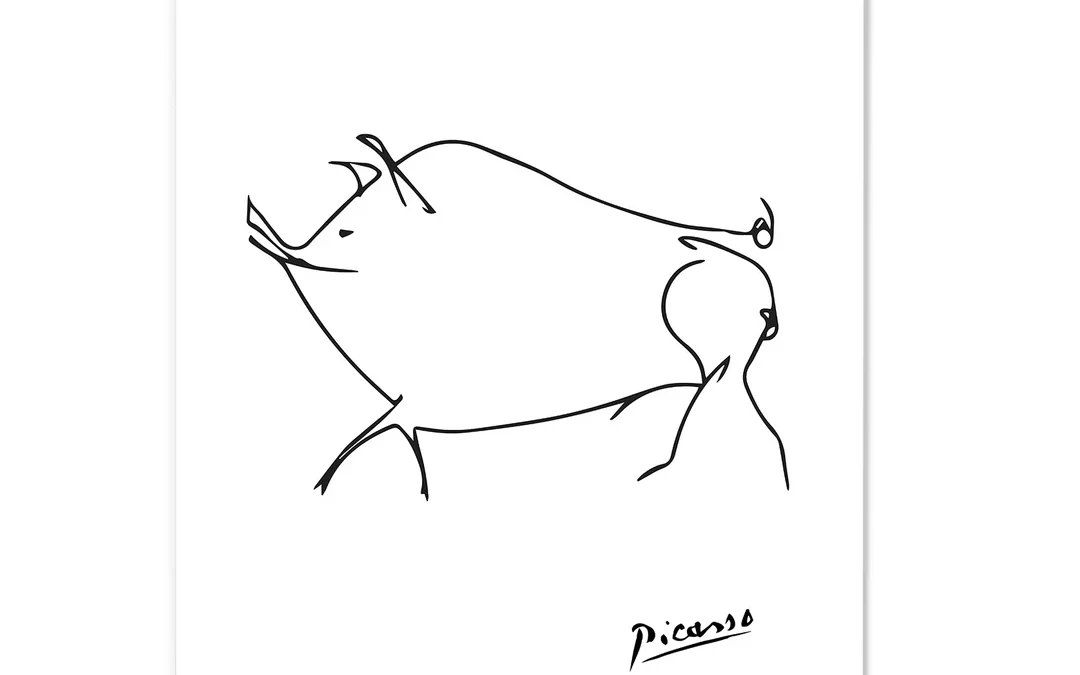
On the other hand, think Matisse. Many of his works began with line. Or Picasso, sometimes only the line mattered. Color and texture weren't part of the work. Line obviously mattered in some of this works.

Color isn't necessarily important in all fine art. Line drawings are a testament to this, unless you consider the colors to be black and white.

The line may become shape.  Picasso's Pig Serigraph became the rustic shape of a pig. Andy Warhol's line became a soup can in one famous work.

Shape is a very important element of fine art, unless you're a minimalist like Agnes Martin, perhaps, whose Untitled No. 5 is white and off-white on white, you may not see where line comes in, but it does. Those colors are laid down in rows, one color and then, the next. These are values of white.

Space means the area around, within, and between objects and elements in a composition. Back to Pollock. His space was completely filled. Space just happened.

But texture? No, it's not adding a bit of burlap to a composition. Texture refers to the visual and tactile surface quality of a work of art. Though it can be the actual feel of a surface, it can also be the visual impression of how something would feel if touched. The artist can convey that feeling.

One of the most famous works to convey texture is Van Gogh's Starry Night.  Or  think Monet. In Water Lilies, he employed used thick strokes of paint giving his work an almost 3-dimensional quality.

The 7 elements of fine art can all be used in a work, or the artist is only the maker of one or three or four elements. Not all are required, but all can be important. It just depends on the artists' inspiration. See how many of these elements you can define in a work of your choice. Let us know in the comments below what your favorite painting is, and the elements used to create it.


We Won!

We Won!

Luxe Life Magazine has awarded Marcello Galleries "Best Art Gallery in Florida for 2025"!


LuxLife Magazine Award to Marcello Galleries
Marcello Galleries Award on LuxeLife

The Impact of Fine Art on Society

The Impact of Fine Art on Society

Fine art plays an essential role in society, providing a unique lens through which we can explore and understand the human experience. It is necessity. It extends far beyond mere aesthetics; fine art evokes emotions, provokes thoughts, and inspires change.

At its core, fine art serves as a reflection of cultural identity, capturing the essence of the times in which it was created. Through various mediums—painting, sculpture, performance, and more—artists communicate complex ideas that often transcend language barriers, allowing for a shared human experience that fosters empathy and understanding.


True Artists in Many Media


The Marcellos had a way of making art from any media that interested them. Irene was an accomplished sculptor, and she always painted with flowers in the summer around her home. Irene once created her "disassembled" woman, which lay flat on the ground in pieces. She exhibited it in the atrium of their Florida home.

They even had a "junk art" period where they used metal scraps to create warriors, crucifixes, big shelled fish on a plank, and many other interesting items. It would be great to have images of those, but over the years, a lot of their work was destroyed or sold.


Fine Art as a Tool for Personal Development


Fine art is an integral part of education and personal development. Engaging with art encourages critical thinking and creativity, skills that are invaluable in today’s rapidly changing world. It invites viewers to question norms, challenge perceptions, and explore new possibilities. The act of creating art can also be therapeutic, offering individuals a medium for self-expression and exploration of their internal landscapes.


Art as Investment


In addition, the economic impact of fine art cannot be overlooked. Art industries contribute significantly to both local and global economies, providing jobs, promoting tourism, and fostering community engagement. Galleries, museums, and art fairs not only showcase talent but also serve as cultural hubs that enrich the public's appreciation for diversity and creativity.

Frank & Irene exhibited in shows here in Florida, and in Pittsburgh and were members of the Associated Artists of Pittsburgh, which has a show each year in the Carnegie Museum of Art.


Fine Art Is Not Merely Luxury


In a world increasingly dominated by technology and commercialism, fine art reminds us of the importance of creativity in our lives. It pushes the boundaries of traditional thought and encourages innovation. Fine art is not merely a luxury; it is a vital component of a well-rounded society that values culture, creativity, and human connection.

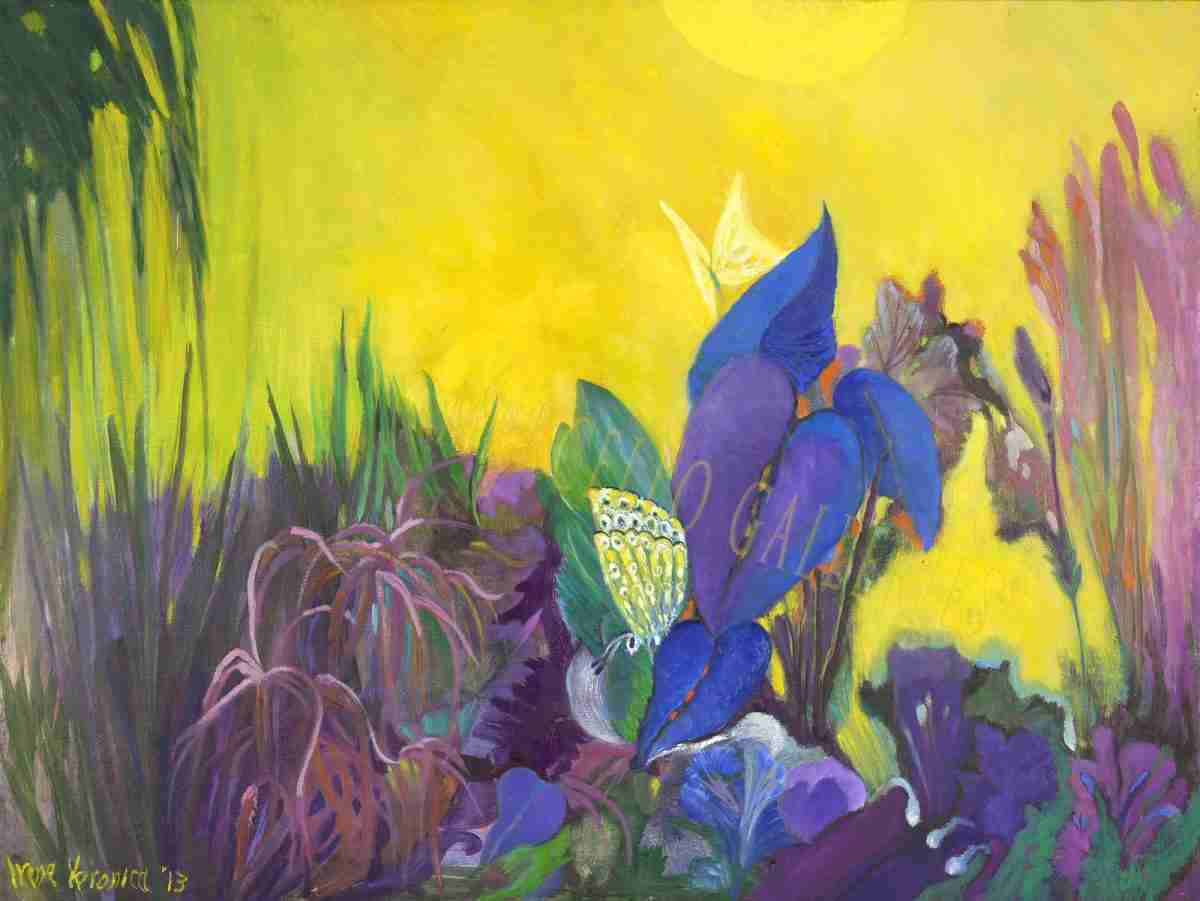
Butterflies Are Free, an original oil painting by Irene Veronica Marcello, 2013
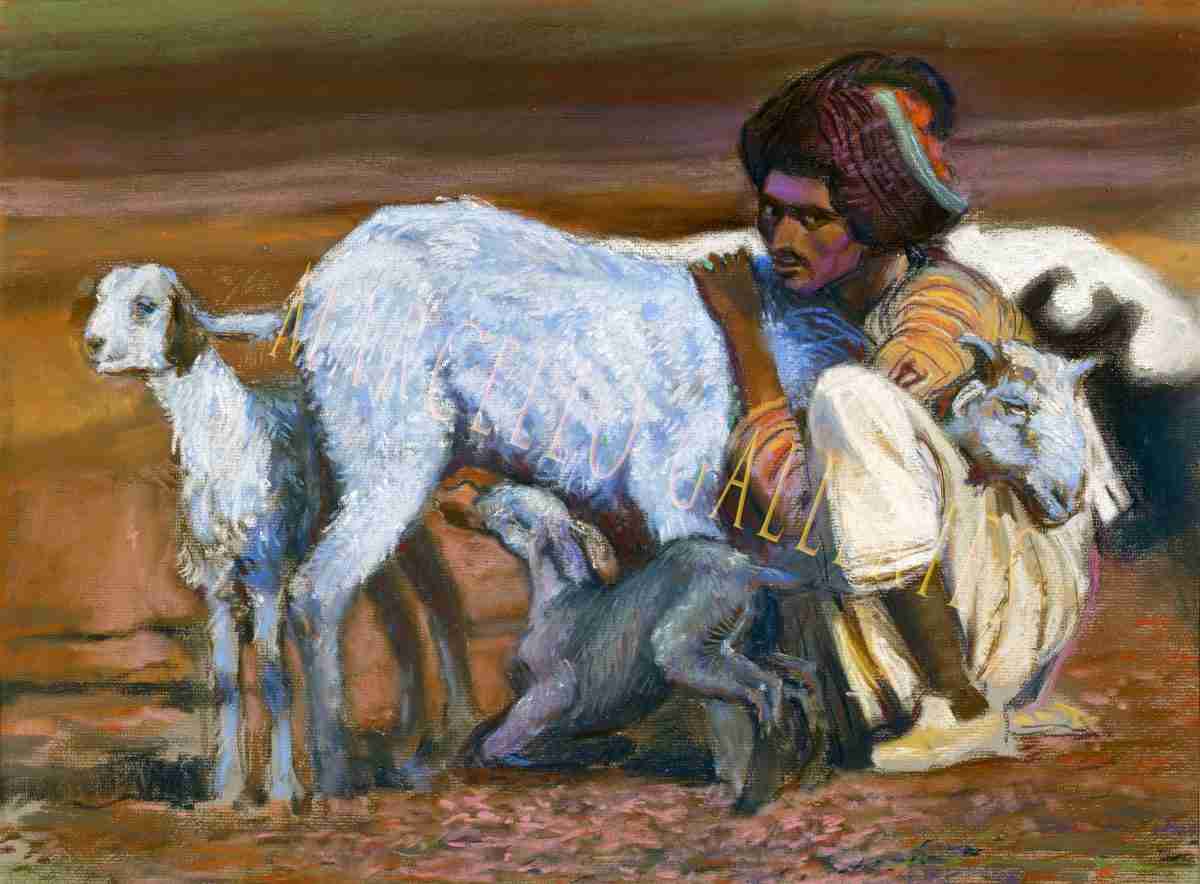
Harsh Life ot a Nomadic Shepherd by Frank G. Marcello, unsigned
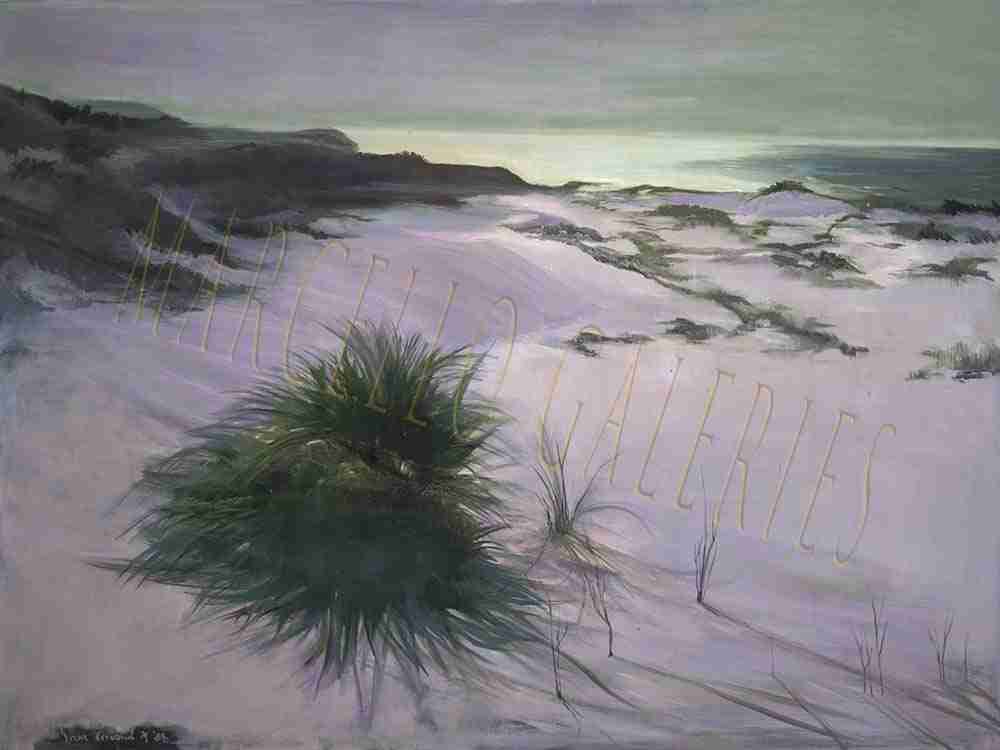
Night Beach by Irene Veronica Marcello
Christ Our Lord by Frank G. Marcello
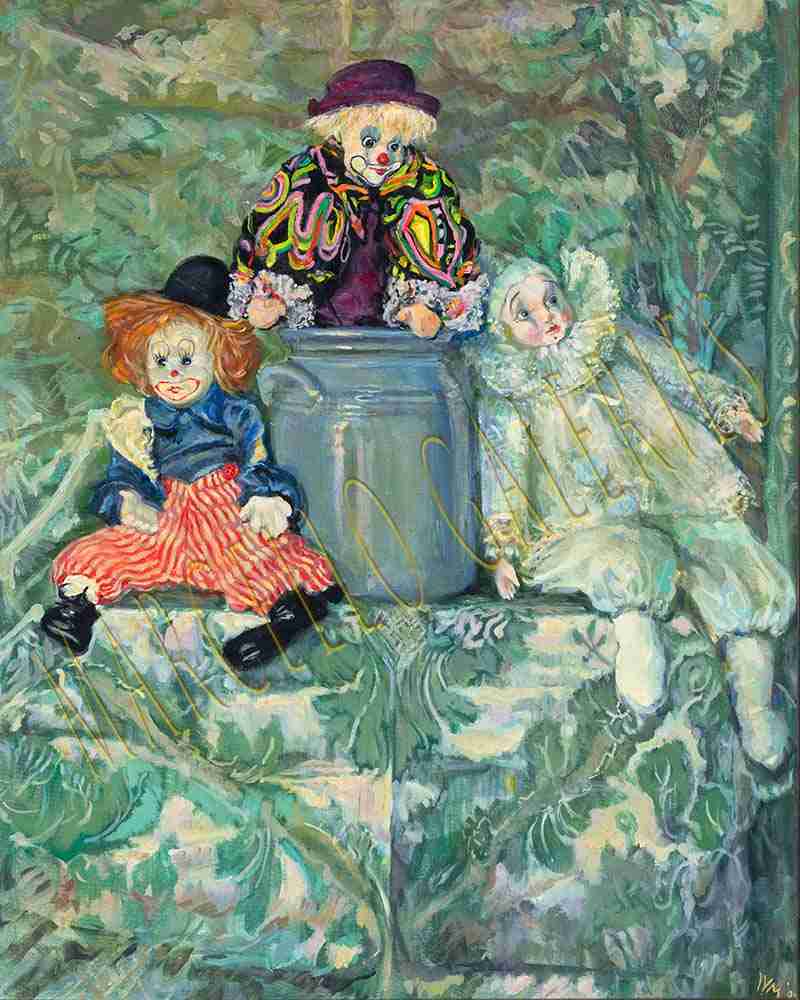
Three Clowns on Green Jacquard by Irene Veronica Marcello